Issue 4 - September/October 2026
/Tower
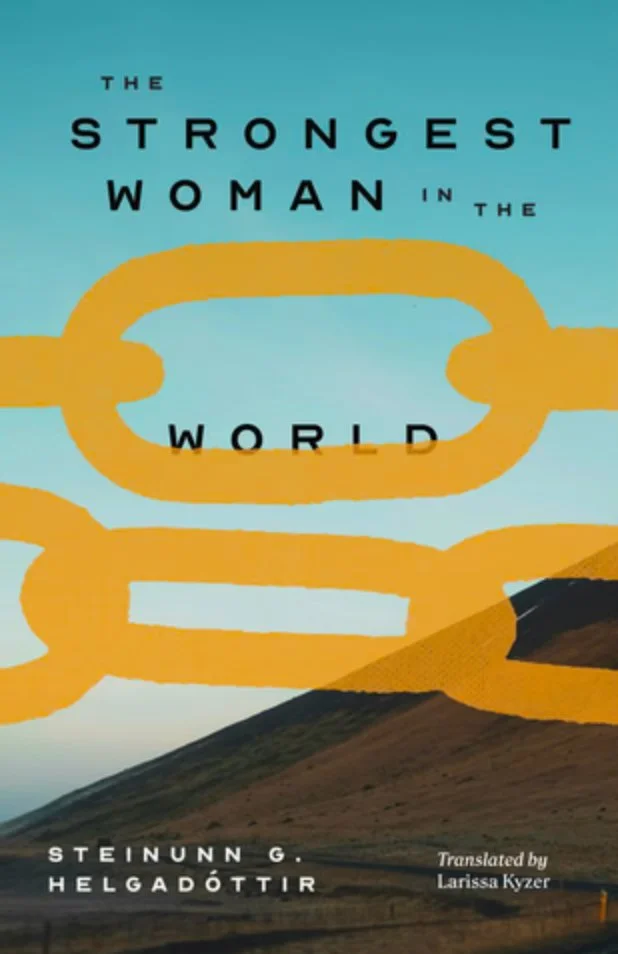
an excerpt from THE STRONGEST WOMAN IN THE WORLD by Steinunn G. Helgadóttir
translated from the Icelandic by Larissa Kyzer
Today’s client made his own appointment when he was still in hospice, and as chance would have it, I had an opening because the woman who’d booked hadn’t died; she’d been in the final stages of terminal cancer when by some miracle, her malignant tumor vanished.
I told him this when we talked on the phone. “Maybe you’ll recover, too,” I said cheerily.
“No, I’ve gotten everything I want—why do you think that woman recovered all of a sudden?” he said.
And now here he is in an ornately carved, jumbo-size black casket. His slender torso is no bigger than a child’s and he’s draped in a maroon cloak. On his head, which seems far too big for his body, there’s a strange, gilded cap and his hands are clenched around a cross on his breast.
Aren’t you in fine feather. I can’t help myself from saying.
I am as I should be, which is more than I can say for you, he says severely.
What do you mean? I ask. I’m just wearing my white lab coat.
Precisely, he says.
This is going to be one tough customer; I’m starting to wish that woman hadn’t recovered.
What can I do for you? Did you have anything particular in mind? I ask.
Yes. I want you to make a quick trip to Hafnir to talk to my daughter. She’s received instructions and knows what needs to be done.
Which Hafnir are you talking about? I can call her if you want.
No, you have to go in person. She never speaks on the phone. And surely you must’ve heard of Hafnir in Reykjanes?
Of course. Is she deaf?
No, but she’s a good, well-brought up girl who doesn’t let the world impinge upon her.
I go silent. What is the matter with men these days? As if the endless squabbling at home isn’t enough. I’m getting fed up and I want to take this pushy old fart by the shoulders and shake him.
Calm down, he says. I’m prepared to pay you double if you make the trip and talk to my daughter. But hold off on taking care of it until tomorrow.
It would actually be nice to get away, take a drive, but he’s going to pay top dollar for it, though I suspect he’s a penny-pincher. And I wasn’t brought up one way or the other.
Octuple, I say.
Quadruple, he says.
Sextuple, I say, and he agrees, knowing full well that he isn’t in a good position to negotiate.
It’s warm and partly cloudy and the road to Hafnir makes for a nice drive. There’s a dreamy sort of haze hanging overhead, and I turn on the radio, but immediately switch off the perky female voice holding forth on how she’s freed herself from negative thoughts.
When I get to my destination, I see the house immediately thanks to the eye-catching tower projecting from one of the gables. There’s a bell hanging from it and as best as I can tell, it’s just like the ones in country churches all over Iceland.
There’s no doorbell, however, just a large knocker shaped like a ram’s head.
It clangs loudly when I drop the hammer and I hear muted footsteps approaching before the door opens.
“Come in,” says the woman before I can greet her. She’s thin and straight-backed, her long dark hair shot through with gray, and I follow her into an empty sitting room. It’s exceedingly warm, as there’s a fire crackling in a large, peculiar fireplace that fills one whole corner. An antiquated silver trumpet sits on the mantle.
“Did Father send you?” she asks simply, and I nod.
“I promised to do this according to his wishes. It’s important when a man in his position dies,” she says.
“What position is that?” I ask.
“He was the priest of the Congregation of the Old Testament.”
“I’ve never heard of that congregation. Is it big?”
“There were twelve of us. Now there’s only me left,” says the woman.
“Where are the others?” I ask, like a fool.
“They’re dead.” The woman gestures for me to sit at a small table. This is becoming a bit sinister and my imagination starts running away with me.
“How did they die?”
The woman shrugs. “They got old and they died. I was the youngest.”
I’m relieved. “Yes, someone’s always last,” I chirp, taking out my little notebook and pen. “So, are you the priest of the congregation now?”
She’s taken aback. “I’m a woman,” she says. “Women can’t be priests, nor can anyone else who isn’t physically perfect.”
I try not to react and open my notebook. “I understand that he wanted to be buried in a particular way?”
“Yes, as befitting a descendant of Aaron.”
“What Aaron is that?”
“From the Old Testament. Only descendants of Aaron may become priests.”
“Wasn’t your father Icelandic?”
“Yes, but he was the spiritual descendant of Aaron.”
I nod as if I’ve heard this many times before.
“And so what is it that we’re doing?”
“We will begin with the sacrifice.”
The jingle of the car keys in my pocket is deeply soothing. “And what do you intend to sacrifice?” I ask nonchalantly.
“A goat. By rights, it should be a ram, but some people moving out of the village had to get rid of a goat, so I got it cheap. It’s tied up in the yard next to the grill.” The woman points out the window where a placid goat is munching on the grass next to an old, homemade grill. There’s a fire going in it and although I’m relieved to hear this thing about the goat, it’s somewhat cold comfort.
“How will that work?” I ask.
“We’ll do it in the traditional manner,” she says haughtily. “It’s regrettable that you’ve touched my father—I would not have had him besmirched; it would have been better to let me see to the preparations. Only kin and priests may tend to the dead.”
I clear my throat. “He was the one who requested the appointment with me, and neither myself nor my studio are unclean.”
She stares at me without saying anything and the silence becomes difficult.
“Are there no other relatives or heirs?” I ask carefully.
“No, father couldn’t remarry after he became the high priest. Not even to a widow.”
“And you . . . ?”
“Oh, you know how it is—these days, no woman goes straight from her father’s house to her husband’s. The daughters of priests who become harlots are burned. I’ll leave behind no descendants, only a living faith.”
The smell from the fireplace is becoming oppressive. “Shall we get to it?” I ask.
She disappears into the kitchen and returns with a large machete and two Kelly-green plastic pails. Then she opens the door that leads to the yard and when she goes out, I follow. I’ve got to see this through.
The woman kneels before the goat, speaking gently to it, then raises the sword above her head and I close my eyes. The cry is chilling; I’ve never heard such a gruesome sound, it sounds human, and I want to run away. When I open my eyes, the goat is writhing, still standing, its blood spurting into one of the pails. Then it collapses and the blood flows slower into the second.
The woman takes a drop of blood and smears it at the very top of both her ears and both of mine, then she daubs another drop on her thumbs. She takes off her shoes and smears blood on the big toe of her right foot but when she looks like she’s about to do the same to me, I tell her I’m not taking off my shoes.
She uses the knife to skin the goat’s right thigh, from which she cuts a fatty chunk before facing south and waggling it horizontally. Then she throws it on the grill and disappears into the house. I can’t imagine going back in there and sit down on a rotting tree stump to wait. For what, I don’t know.
I jump when I hear a deafening, dissonant fanfare and looking through the sitting room window, I can see the woman standing in front of the fireplace, blowing on the horn. Then, mercifully, she moves out of sight, deeper into the house, and the fanfare ends. That’s when the bell-ringing starts. I retreat all the way to the fence and from there can see the woman hanging from the bellpull, almost swinging, and the bell’s gloomy toll rings out over the village and out to sea.
How will people here react to such goings-on?, I think as the woman calls to me. When I go inside, she’s serving up thin slices of grilled meat.
The meal is simple but tasty and while we’re digging in, I ask whether she mightn’t have a friend, that perhaps it isn’t good to be alone under such circumstances. In sorrow.
“We do not mourn,” says the woman. Then she stands up, sweeps the ashes from the marble plate in front of the altar and brushes off her dress.
The woman can feel me looking at her and she smiles.
“I clad myself in strength and respect. I laugh at the future.”
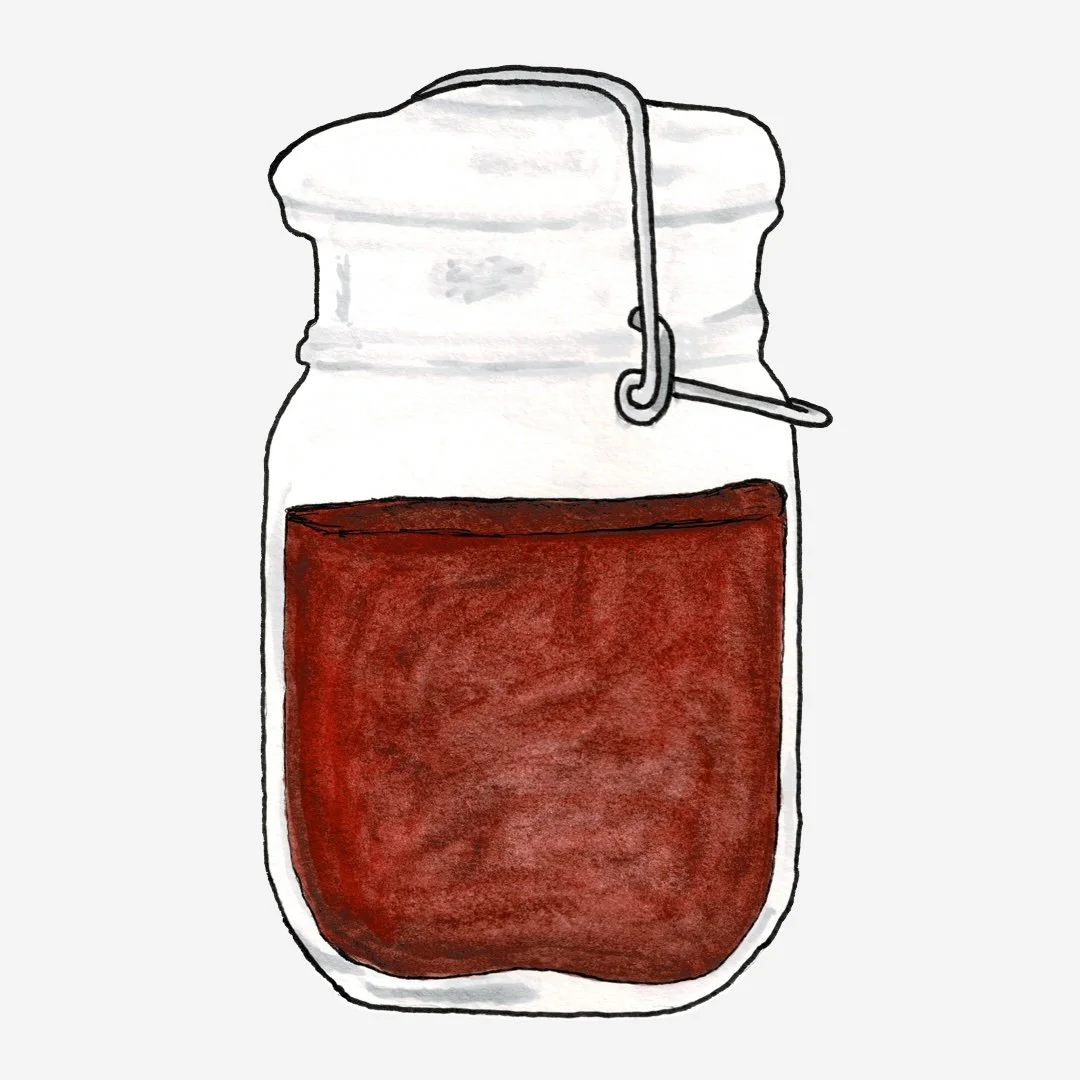
When we drive back to the city, she has a jar full of blood in her lap.
“Careful not to spill that,” I say sharply, and she nods obediently.
I turn off the alarm when we get back to my studio, tell the woman what colors are best to use on the body of an old man, and how to do the makeup on his hands. She’s dressed in a red caftan and gets started as I walk into the break room to brew myself some tea.
After a long while, she calls to me and I go in. The corpse is lying there in all its multicolor glory, with a symbol that she drew on his forehead, a smear of blood on his right ear and thumb and I don’t even peek at the big toe of his right foot in its white sock. The man appears calm, cool as a cucumber.
“I am finished,” says the woman, rinsing the blood from the jar, and I don’t ask how she’s getting home or whether she has a place to stay overnight—I just want to be rid of this individual. I practically shove her out the door.
Give woman the fruits of her hands and her works shall glorify her at the gates, intones the man from the casket, and I hurry into my coat, leaving my shoes untied as I step into them, turn off the light, and set the alarm.
Steinunn G. Helgadóttir is a visual artist, poet, and novelist. She is the author of two collections of poetry, including 2011’s Káfbátakorinn [‘The Submarine Choir’], which earned her the prestigious Ljóðstafur Jóns úr Vör poetry prize, four novels, including Raddir úr húsi loftskeytamannsins [‘Voices from the Radio Operator’s House’], for which she won the Icelandic Women’s Literature Prize in 2016, and one short story collection, coauthored with Helga S. Helgadóttir and Sigga Björg Sigurðardóttir. As a visual artist, Steinunn’s work has been exhibited in solo and group exhibitions around the world and she has curated numerous exhibitions in museums and galleries in Iceland. Her story “Tower” is excerpted from The Strongest Woman in the World, which will be published by Open Letter in September 2026. Steinunn lives in Reykjavík, Iceland and Malmö, Sweden.
Larissa Kyzer is a writer and Icelandic-English literary translator. Her translation work has earned her the American-Scandinavian Foundation’s Nadia Christensen Translation Prize, the Icelandic Bookseller Association’s Incentive Award, and a Pushcart nomination. She has also received support from the NEA, the European Union Prize for Literature, Fulbright, the American-Scandinavian Foundation, the Icelandic Literature Center, Reykjavík UNESCO City of Literature, and Finland’s Kone Foundation. Larissa is on the steering committee of the National Writers Union’s Literary Translators Division, a member of the Icelandic Writers Union, and on the board of the American Literary Translators Association. She splits her time between Brooklyn and Reykjavík.