Issue 3 - July/August 2026
/And If the Earth Must Be Watered with Blood
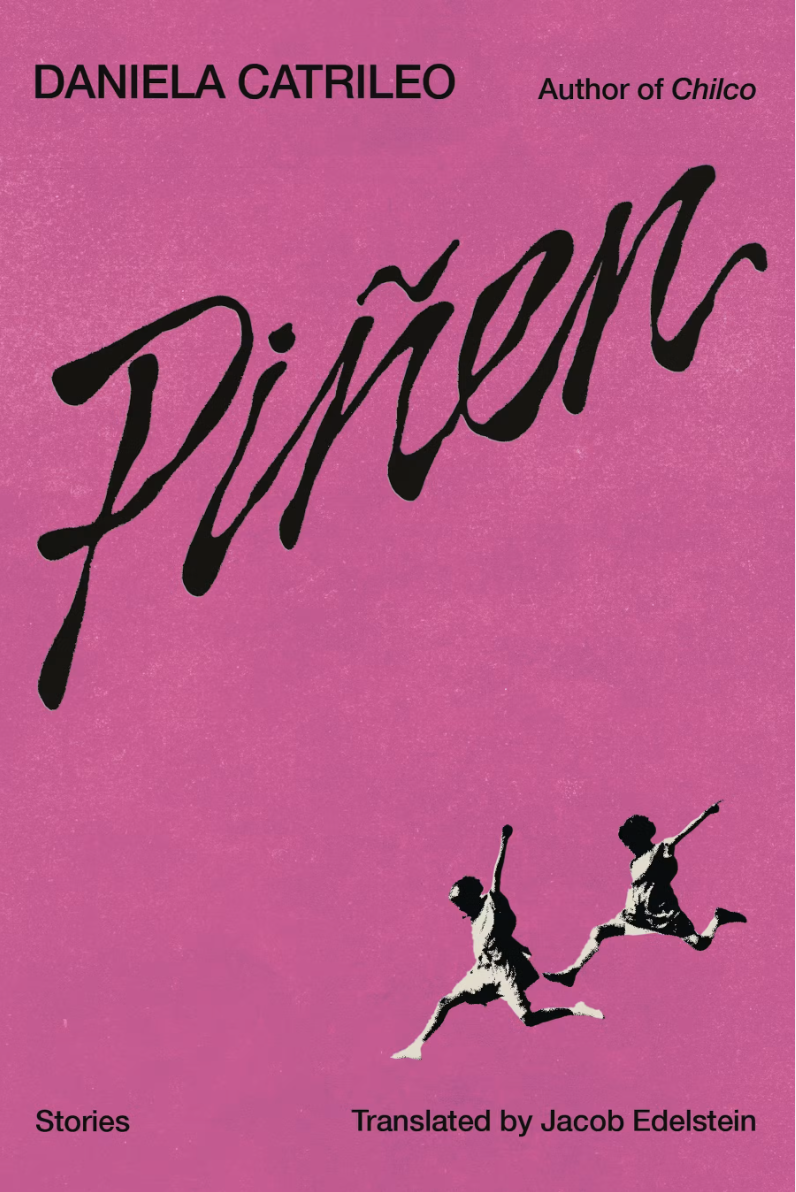
a story from PIÑEN by Daniela Catrileo
translated from the Spanish by Jacob Edelstein
Today is December twenty-fifth. I want to write to him, but it’s been a long time since we talked.
He should be traveling with me right now, or already there. But no one wants to talk about him there. If by chance his name comes up, the walls swell with discomfort. The aching ribs of the house press in on us. Everything creaks, our skin burns. Something breaks inside. And in that crack, the once meal of tomato, garlic, and goat cheese turns bitter, like a sour causeo. The after-dinner conversation is cut short, and the garden’s calla lilies die before their time.
Not even food can save us.
There, no one wants this sadness that’s also hunger. “Ay, not again,” they say with a sigh, tired. Besides, it’s summer, and there’s no wind in that city. They don’t want to pick at the open wound when it’s in the eighties and bearing down. I once heard my grandma say there’s nothing uglier than crying in the sunshine. I don’t know who exactly that jab was meant for, but I learned it so young that today it’s more like a commandment. I hate summer; I can’t breathe.
So, in December, I train myself: I endure, take a deep breath, like I’m about to dive into a well full of frogs. Yes, my relatives are the frogs.
I repeat: I’m not going to cry on this bus. I’m not going to cry in summer.
I’m getting closer to the city; I feel the roughness of its map. Sharp quartz juts from the surrounding peaks. Every hill is a forest of nettles, hawthorns, and ground glass. “Here I go, Pan- American Highway. Here you’ve got me back,” I think. Beyond the curtain, the signs jumble, slip past in a blink. Tortillas de rescoldo, wicker sculptures, Pelequén’s stonemasons. Beneath every bridge, new channels for gravel and cranes are born; the gold panners are long gone.
I read: yellow gravel, sand, crushed stone, river rock.
Everything weighed out by the pound. Everything has a price.
What’s left of the river is for sale.
I say his name softly, so as not to lose the echo of childhood, that sticky trace of who we are. Because without his voice, there is no childhood.
Our bodies are erased from photographs, the names embroidered on our clothes come undone, baby teeth disappear from our mom’s nightstand. There’s no umbilical cord anymore, but the little girl I once was demands her clouded part. And even as I fill with fog, I say: Ale, Ale, Ale, Ale.
I say it to honor him, even though I don’t want to.
I invoke a spirit I don’t recognize anymore, a failed spell. When I was a girl, he taught me the letters in his name, a l e. Years later, I learned they mean “moonlight” in Mapudungun.
My grandfather christened him as soon as he saw his face lit up at midnight. Or so they said.
It’s the legend of his birth, his deep silver bath.
Maybe, before saying mom, I said his name: a l e.
────────
I arrive at the terminal; I need to transfer to the metro. I look at the sky for a while. On the horizon, I can just make out a dull blue silhouette about to disappear: The mountain range is a docile animal. At least there are clouds, piled up, they look like a distant sea, a wave greeting me from far off. I descend the stairs and surrender myself to an organism propelled by light. She spills over us and, like a capricious goddess, lets us fall into the underworld.
This is what it feels like to travel underground; I never get used to coming back.
My clothes carry remnants of smoke; with every movement, they give off firewood.
Heat pours into the metro cars. Its warm air lulls the passengers to sleep; we can barely open our eyes. Windows closed, from the ceiling a transparent, dubious, obstinate liquid drips. Drops of our supreme sweat, condensed. It’s so stubbornly alive that it keeps flowing even outside the mammalian body. I’m jealous.
In this stifling heat, my hair looks like a sad jellyfish, one with its tentacles all tangled across the sand. The animal doesn’t understand how it got there, or why the sadness. It drifts through the depths without a mind or a heart, and like a rudderless ship, runs aground on a pile of rocks.
A woman called them “the sea’s tears.” I was so surprised by this name that, without knowing her, I said, “Excuse me, miss, you’re a poet.” She smiled politely, and I felt embarrassed. I don’t know why I acted that way. I didn’t think before I spoke, before I interrupted her.
The words just came out of me in the way a shining object might emerge from the mud and tempt one to exhume it. That’s what desire feels like: an incandescence in the filaments of the throat.
A throat with its own mouth.
Around her, my face looked enamored, but my palms were empty, with no sign of the love line. That woman’s name was Natalia; she left me after a few months.
She didn’t seem like a poet to me then.
In moments like that, I’d have liked to have him close. Ale was with me the first time my heart was broken. And even if I’d wanted to, you never forget that. I was fourteen; he was about to turn eighteen. That day I received a brief, cruel letter, unsigned, just an: “I don’t love you anymore.”
It was winter, the year of the water horse according to the Chinese horoscope.
I don’t know what animal it’d have been in the Mapuche horoscope; let’s say the year of the fire pudú. Our rooms were separated by a blue curtain with little golden stars sparkling around its edges. A piece of sky divided us, its moonlight, maybe.
In the early mornings, we could hear each other’s sleeplessness, our nightmares. From my pillow, I’d listen to the strange languages that wrapped around him, along with the gentle rhythm of his breathing.
As kids, we got used to telling stories from one room to another, until we fell asleep with the words, with the beings we summoned. But that night I didn’t want to talk. I cried softly, making a whimpering sound like a newborn animal, and I barely dozed off.
The next morning, like every morning, we walked to school together. We moved through the blocks, following an imaginary line drawn on the sidewalk, until we’d left the watchful eyes of the alley behind. One apartment might contain twenty eyes, or more. And the power of their tongues sometimes tripled that. The scrutiny extended even to what we didn’t do.
We looked like fugitives, dodging narks and sapos. Maybe we were.
With every step, the “I don’t love you anymore” echoed. I turned the phrase over in my mind. Before I knew it, we were on the corner near the high school. I don’t remember if Ale said anything to me along the way. At least I hadn’t opened my mouth. Then, unexpectedly, he stopped and hugged me, a fallen condor dragging its wings in the face of heartbreak. I stayed still. I’d swallowed the words in the letter with shame, but he always found ways to know.
His smell enveloped me: herbal shampoo, cigarettes, marijuana.
He let down the bun in his black hair. His chestnut eyes looked clearer, more direct, backlit. He smiled defiantly and said, “No way in hell we’re going in there. Better just get out of here.” I nodded. And, secretly, I said thank you as if I were praying to him. I didn’t care if I had to repeat the year, as long as I didn’t have to see my classmates or explain myself to my teachers. I couldn’t concentrate on the end of the Cold War, much less on sophomore-year quadratic equations.
He wouldn’t cut his mane; I wouldn’t stop loving him.
Bye, school.
We turned with a militant about-face and stuffed our ties into our backpacks. Ale pulled a joint from his wallet, lit it, and passed it to me. We bought cold beers and wandered along the train tracks, seduced by the rust on the rails and the fury of the freight trains, escaping our schoolwork like beautiful beasts.
In the neighboring yards, grapevines, blackberries, and prickly pears spilled over fences, their wild branches scaling wires into the sky. The large adobe houses slept beneath a thicket of greenery and dust, though you could hear their hearts beating: Chickens, dogs, and horses spurred the concert on. The undeniable presence of sound.
So we wouldn’t fall, we walked along the rails with our arms out, as if we were piloting those paper planes Grandpa used to make us. Up, far above the sun.
There, together, once again, we’d survived.
High, without vertigo, close to death.
People used to say a lot of stuff about Ale. I don’t know how true those stories really were. He went from being a shy, kind neighborhood kid to someone who, with a cold resolve, pulled together bad company and worse luck. He picked up a few nicknames, each one worse than the last. Not one of them had anything to do with the true meaning of his name.
One day, money went missing from the house, and he became the prime suspect. After months of yelling, slamming doors, and beatings, he stopped talking to our father.
I never knew if it was true; I didn’t want to believe it. But he accepted his fate with fierce pride, as if he’d already been condemned. My mother went back and forth, from body to body, searching through the fragments, the scattered limbs, attempting to mend what was lacking, trying to restore the two of them to wholeness.
But it was already too late.
Suspicion seeped into every room, every fold.
Perhaps that’s where his flight began.
────────
The neighbors liked to listen, to express opinions for the absurd pleasure of hearing themselves talk. They repeated the same judgments over and over again, becoming entangled in them. They magnified every mistake, because they needed a villain in order to feel respectable, to be redeemed, to more thoroughly believe themselves. Even though the bad one could have been any one of us. None of us were so virtuous, none so pure. Our murky waters frightened them. I don’t know what they wanted; after all, we were their descendants. Bone of their bones, flesh of their flesh.
The truth is, when I was with Ale, despite the chaos, everything became lighter for me. A moon illuminating the fog of adolescence. Or that’s how I like to remember it. I felt invincible with him. And, from time to time, he gifted me a little bit of his lightness, a breath among the ashes. I couldn’t understand how the pieces of him others had were nothing at all like mine. Something didn’t fit. But there are still those who confuse light with darkness.
At dusk, we decided to go back. He gave me a piece of mint gum, some eye drops, and, like it was nothing, took out a can of spray paint. Back then, Ale would mark every wall, every street. I remember his hands splattered with acrylic paint, as if he had blue veins, thick and shining. He was obsessed with this phrase: “And if the earth must be watered with blood.”
He never told me what it was from. I turned the riddle over and over in my mind. I always imagined it could be a translation of a song or something like that. But that afternoon he changed the phrase and wrote: “I’ve already forgotten you.” He turned around, seeking my approval, and winked at me.
Some of his words are still intact under the train tracks, at Maestranza, at the San Bernardo station, in that old market that later became an evangelical church and is now a bargain mall.
We got home before our parents. We hung out in his room, noticing how the celestial bodies on the curtain seemed brighter. He put on a CD. On the case, there was the naked torso of a blond woman and a phrase in red: This is hardcore.
I rested my head on his belly.
That was the first time I’d listened to Pulp with a broken heart.
As winter came to an end, Ale disappeared.
────────
A young man in front of me nods off and startles himself awake with his own snoring. It’s like he swallowed a gust of wind, a twister, devil and all. He looks at me for a couple seconds, tries to stay awake, but his eyelids are insect wings, and they droop. I’ve observed this phenomenon in termites and mayflies: The slimy, fallen bodies pulse with their memory of the heights. The throbbing of their flesh announces they’ll soon be corpses.
The difference with humans is that we don’t recall our future death; we don’t name it until it appears to us, and by then it’s too late to escape the universe of epitaphs, mantras, and funeral pomp. Even though we walk alongside ghosts brooding and tugging at our clothes, we prefer to avoid them, especially during the day.
I wonder if my mom thinks Ale is a ghost, and that’s why she avoids him. She forgets that he can’t have died without a wake.
Before reaching Estación Central, the metro slams to a halt. Phones, fans, and wrapped gifts go flying. In the corner of the car, a group of women fall, and porcelain figurines tumble away.
A little chaos: screams that echo like thunder, the smell of burnt fried food, and a baby hiccupping and crying inconsolably.
We all topple over other passengers, a heap of elbows and knees buried in each other’s cavities. Embarrassed by the sudden proximity, we slowly go back to our initial positions. For a moment, the scene looks like a painting, a reproduction of a minor battle or someone’s home on a holiday. In spite of the disaster, I opt for the festivities.
Then I remember that poem by Juarroz, that Ale read for my birthday:
At the center of the party
is emptiness.
But at the center of the emptiness
is another party.
No one collects the figurines, not even the ladies.
We are the emptiness, the party.
Among the wreckage, the bodies in impossible positions, I can see a headless saint. Or maybe it’s an angel, or a fairy. It’s not a goblin, much less a virgin. That’s what I think I can see from here. I wonder if the headless gesture is a pagan sign or a divine command.
Or maybe both at once.
Slowly, our voices rise into an irritating buzzing. Through the murmuring, I make out some conjecture; it’s always the same theories. I’d like to overhear something different. One of the ladies who fell wants to get up, and makes an effort to crawl, but from the back someone shouts: “Hey, if any of you ladies hit your heads, it’s better if you don’t stand up, it can be really dangerous.” So, obediently, they settle into comfortable positions and cling to the floor as if they’re testing the law of gravity with their own weight.
One has curly copper hair, another a layered cherry-red; they both wear it short. I know the range of reds very well, because a few years ago, my mom experimented with every shade: burgundy, pomegranate, fire, red coral, vibrant red, copper.
She never found the perfect one— she’d say none of them were red-red— so she went back to almost mostly black. In the red-haired years, Ale still called. Sometimes he left cryptic messages to decipher, which our parents weren’t even a little amused by. I collected his words like they were stones, branches, shells. I created a man-child, a man- brother, a man- moon.
His room still seemed complete, despite the tangle of lichens and vines climbing over the warm bed, still waiting for the absent one. Time doesn’t exist in the patience of objects; they’re just filled with dust, or us, who are the dust.
I stayed there a few nights, in the dark belly of his room. It felt like a shelter for survivors, or a nest for abandoned little birds. But the mattress began to collapse in on itself; later it looked like a storm and someone from the alley said it might be haunted. They hung all sorts of things from that bed: scapulars, little saints, silver medallions, holy water, rosemary wreaths, and candles that changed color depending on the mood of the house. I don’t even remember which neighbor first let my mom in on the psychics’ secrets. Until Grandpa showed up, furious, and said: “This isn’t kalku at all.” He spoke about the dream he’d had when Ale was born. The word— “pewma”— sounded so beautiful in his mouth that I repeated it all week. He talked about forgetting being an ancient wound that never ends, as he prepared a maté with lemon verbena.
Then came a long silence full of unhappiness, one that lingers to this day, and that’s why no one says his name anymore. It became dangerous. They sewed their mouths shut, so their sad tongues wouldn’t betray them.
Every family is a country. You can find disasters and triumphs. That’s why the mattress ended up covered in scabs, mites, bedbugs, pests. There, in a corner of the blocks, next to the Haitian hair salon, between the slot machines in the plaza that isn’t really a plaza. And every so often, it sprouts weeds, scrub grass, coca- paste-huffers, and litters of parasite-ridden puppies.
The metro doesn’t move. Out go the lights. The women stay on the floor for a while; they’re chatting and seem cheerful. I don’t know how long we’ll be stuck here. Maybe I should lie down next to them and ask where they were during the last earthquake. Around here, that’s a good question to start a conversation; afterward, you can vent your sorrows, too. And maybe that’s when I’d let myself cry a little, quietly, with my truth, even though it’s summer. After all, it’s not like my grandma can see me here. I could follow with a “You know, I once had a brother. Maybe you’ve heard his name, he was all over the news.”
When Ale disappeared, an avalanche grew inside me that never fully came down. Now there’s a great mountain in my chest, and it drips and drips: snow, hair, furniture, pine plantations. I don’t know how to stop the landslide from dragging me along with it, this only-daughter affliction that feels like a curse, like the evil eye. But I don’t want to carry this devastating force inside me.
Whatever happens, they seem like ladies who would comfort me.
In each one, I look for a mother, a grandmother, a brother.
Any conversation seems more interesting to me than watching the sleeping man’s head bob. The ladies burst into laughter; they’ve become so friendly in the crash that they blend together, and I can’t quite distinguish their reds anymore. They mention something about potato salad or hips. The metro car relaxes a little, and even the hiccuping baby stops crying.
────────
We’re stopped in the tunnel for a long time. Something comes over the loudspeaker, but the sentences disassemble, slipping into a sprawling onomatopoeia, like a wave against the cliffs, a clicking of the tongue, and the trembling call of a frog that fears its extinction.
All at once.
Then, over the loudspeaker, I hear:
jrushtchcroac
a loop of broken syllables.
jrushtchcroac
a map of sounds that shifts its borders.
jrushtchcroac
a language tired of existing in the mouth of a newscaster who works too many hours without a full-time contract.
Poor language.
Poor.
Language.
jrushtchcroac
I can’t fight the drowsiness. To keep from falling asleep, I picture all the inventions I’d like to bring to life, but after a bit they come apart: Sleep overwhelms me. The ideas dissolve into a faint strand of an image, too slight to be threaded. An ambiguous figure, a thought without a head, tail, or wings, a dream that unravels. A symbol that deforms until its meaning is dislocated. For an instant it was a flash, or a lightning bolt, and now I have only crumbs. Yes, in desperation, that crack is illuminated.
It’s no use. He appears to me, and the fantasy is driven off by his absence. Like a cloud, I feel like I could touch him, but after a while he disappears. My restless mind keeps gathering memories:
A drunk Ale reading poems on the summit of Chena.
An Ale with his mouth stained methylene- blue, from seeing if it could get him high.
A disgusted Ale tasting the ñachi grandma gave him.
A little Ale saying:
“Sister, repeat after me, A L E.”
This drowsiness makes me feel stupid, or maybe my nostalgia is chronic. It depends on who’s judging. If it was my mom, she’d say idiocy; if it was my dad, sadness. I’m betting on a brief hallucination driven by summer fever, which in turn is driven by climate change, which in turn is driven by big industries, which in turn is driven by billionaires who don’t believe in climate change.
We already know.
Let’s say I’m that liminal space.
Idiocy, sadness, fever. That zone that my mother, my father, and I think of.
Ale was that, too.
After all, we grew up in the same country, in the same family, in the same womb.
I put in my headphones, put on “TV Movie.”
A hoarse Ale sings with his guitar:
Is it a kind of weakness to miss someone so much?
────────
We’ll be stopped for several minutes. I focus again on the dubious liquid, thinking about the accumulation of the passengers’ perspiration. Maybe it’s a deposit of ancient sweat, empirical proof that unity is strength. I think of a joke but forget it immediately. I forget it because one of the drops falls on my left leg. Suddenly my leg is a bald head, naked, exposed. I shouldn’t have worn a skirt. I wipe myself before anyone notices, as if it really matters. I remove the moisture with my hands, which are also wet. I try to dry them, but they’re sticky.
Now I can’t stop thinking about how that drop is on my fingers, that drop created by so many other anonymous drops, organic trivialities the glands decide to evaporate.
The drop becomes a stain; I have an invisible stain, though I can feel the grime.
It wants to mix with my perspiration.
I try to dry myself with my other hand. I bring my palms together and rub them slowly, skin to skin. But the mixture of hand cream, smog, other people’s sweat, and my own leaves a streak of piñen. In this moment, I’m just one more of the thousands upon thousands of bodies that pass through here every day.
What could I call this community, this being of water and sodium? The liquid god, the assembly of fluids, the mother exudation. I’m part of a story that transcends me, a saline tale secreted by mammals of all sizes, creeds, and nationalities. Or at least by those who travel on this route. But I’m not impressed; I don’t know if I want to be part of this project.
The supreme sweat problem looks a lot like those illustrations of the greenhouse effect in science textbooks. Little arrows in different directions, falling from the sun onto a landscape, and from the landscape back to the sun. The greenhouse effect and the hole in the ozone layer were our little childhood apocalypses, ways to scare us about the future.
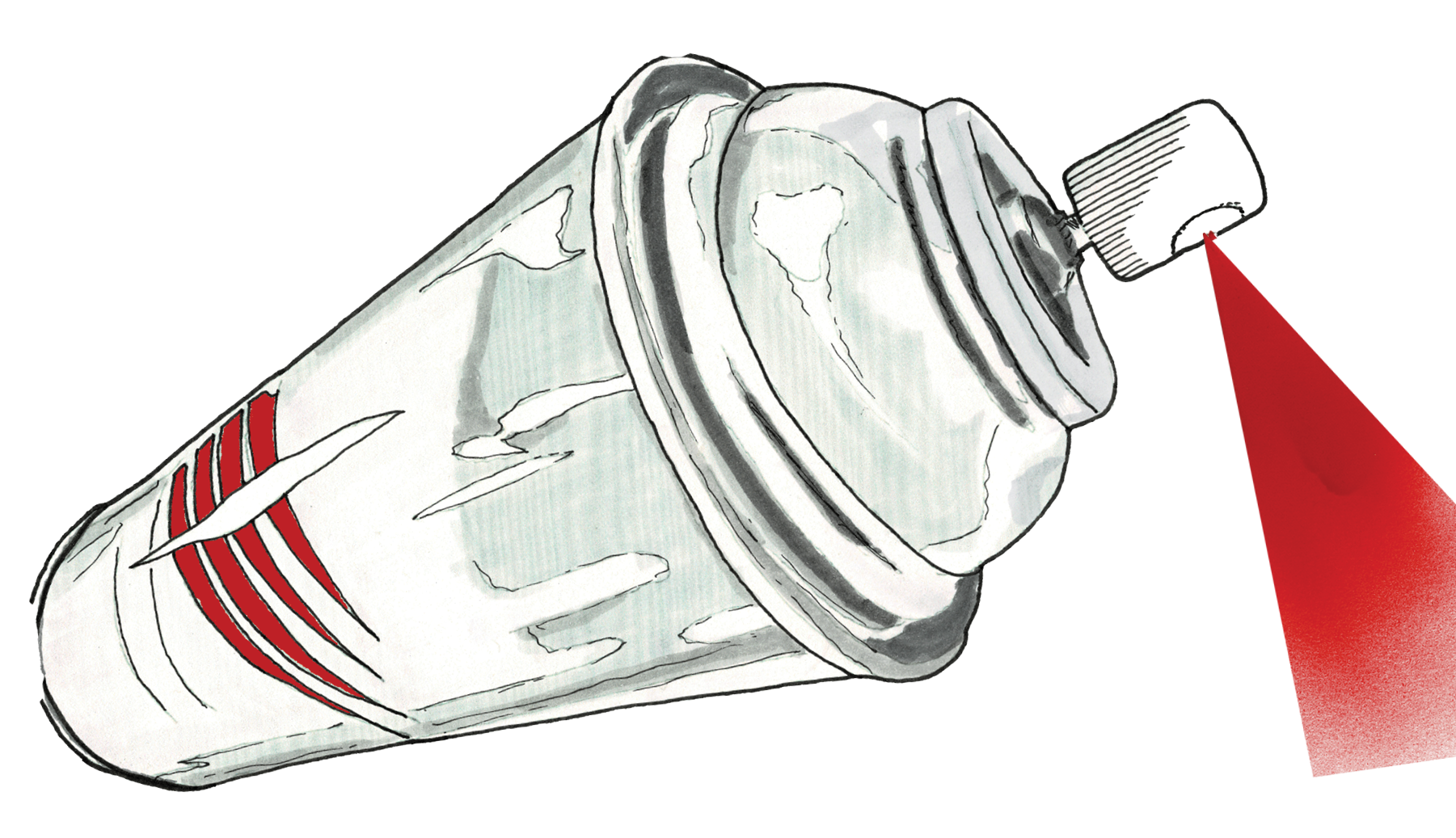
At school, they made us draw posters with a picture of the Earth, sad because it was broken, and a spray can with an evil face. Our radical environmental protest was the front of the school papered with our interpretations of good and evil, in the middle of a neighborhood of concrete and dust that, maybe, had a couple of trees and many attempts at flowerpots pieced together from trash. Tires with sunbursts, teapots with succulents, tubs with San Pedro cactuses and snake plants.
Then, Ale, like he was a professional cartoonist, drew a spray can with an arrow’s tail. A spray can with vampire teeth. A spray can with a poison tattoo.
Back then, adults were still saying we could save ourselves, although I don’t know if they meant the planet. And there we were, a brigade of children collecting cigarette butts and recycling yogurt containers to make seedbeds for legumes. But at some point, the plot changed.
From one moment to the next, an immense glacier melts and sinks to the seafloor.
From one moment to the next, your brother is a lonely polar bear on a piece of ice that no longer appears on maps.
────────
What will they make the red-cheeked boy next to me draw? We inspect one another. I’ve never seen someone so happy with his Colo- Colo jersey, his drink, and his sweat, as if he needed no more pleasures in this life.
The boy is the only witness to the drop on my leg, the drop in my palm, the drop in my hands, this original stain. I feel like he’s judging me as he slurps dry his Fruna fruit drink. I try to look away and go back to my imaginary projects, but he persists with his black eyes, like little Azapa olives, observing my grime. I think he’s capable of perceiving what’s outside as much as what’s inside. That’s why he worries me.
He must have a very old soul.
Ale would have said that this boy is one of ours, although the truth is that here we all look alike.
The lights in the car come on, it resumes its progress, and some applaud.
The ladies finally get up, and let out a happy, “Eh, eh, eh.”
We arrive at Central Station. I stand quickly.
I transfer from the metro to the train, toward San Bernardo station.
I don’t even know if Ale has a phone. I don’t know if he uses one. I don’t know what his face looks like now, his hair.
If he has children. If anyone dares to say his name without their bones crackling.
When he fled, the police pursued us. So long, too long. We felt used to the word “disappeared” until it changed to “in hiding.” And that change seemed immense, it swelled like a many-tongued animal in the mouths of the neighbors. A disobedient orchestra inside their bodies, a very strange instrument no one knew how to play.
The disappearance swallowed his name. And the moon’s glow lingered like a murmur in the blocks. Like when a light goes out because there’s no star to sustain it, and the shudder becomes a myth.
To some, he’s a hero; to others, a criminal.
One day, I left, too. But I didn’t disappear. Sometimes I return, visit the survivors of the catastrophe. I carry this landslide in my chest.
I spent years waiting. Alert, attentive, thinking a letter would arrive. Or that I’d run into him by chance at a bus station. I honed my sight, honed my hearing.
But only his orphaned letters remained under the bridges.
I’d like to write to him, but it’s been so long…
I’d write:
Ale,
Today is December 25th. Some celebrate Christmas, others the fall of Pedro de Valdivia.
You know our family is in between, they like the celebration.
Whether it’s death or birth, there will always be toasts.
And, at the end of the night, someone will put on a cumbia that says:
I don’t love you anymore
And if the earth must be watered with blood
I’ve already forgotten you.
Daniela Catrileo is a writer and a professor of philosophy based in Valparaíso, Chile. She is a member of the Colectivo Mapuche Rangiñtulewfü and part of the editorial team at Yene, a digital magazine. She has published three poetry collections—Río herido, Guerra florida, and El territorio del viaje—as well as the novel Chilco, the story collection Piñen, and the essay Sutura de las aguas: Un viaje especulativo sobre la impureza.
Jacob Edelstein is a translator from the South Bay of Los Angeles. His recent translations include works by Daniela Catrileo, Christina Bendek, Monserrat Sepúlveda, Santiago Arau, and Yael Weiss. His translation of Chilco by Daniela Catrileo received a 2025 PEN Translates award.