
Issue 1 - April/May 2026
/Enanu’s Message to the People of Shiromeda
an excerpt from Broth (Mereq) by Adam Reta
translated from the Amharic by Bethlehem Attfield
Enanu, or Enana as we often call her, is my grandmother and lives on Mesfin Harar Road. We are not blood relatives, but she was like a sister to my maternal grandmother, Seble Meshesha. She is a no-nonsense woman who demands attention and expects obedience. My family often implored her to move to Shiromeda, the north part of the city, so she could be closer to us, but she refused to abandon the house she grew old in. It would take me a half-hour taxi ride to get to her house. I usually bought Wahid’s sugarcane when I went to visit her. “Wahid knows how to stock good-quality sugarcane. Please get my treats from him,” she would say to me. Once or twice, I got her sugarcane sticks from another vendor, and I think she noticed.
I stuffed some coins into my pocket and left the house. There were many wild doves picking at the scattered grain on the not-so-busy tarmac road. When a car approached, they flew away then settled back on the road. Next to the doves on the roadside, Wahid was talking to Maldia, the injera supplier. I shouted across the road and asked him to give me sugarcane for a quarter. He bid the woman farewell and started cutting the sugarcane.
“Are you going to visit Enanu?” Wahid asked me as I drew nearer.
“Yes.”
“She likes her cane with the joint, doesn’t she? It’s hard to split it at the joint. How can you cut a piece with two joints?”
“Just do it the way she likes it.”
“Are you thinking of the saying, ‘Don’t let a dying old woman curse you’?” he said, laughing.
“Who cares about old tales?”
“Just saying… Here you go. Do you have a bag?”
“I will get one from Temam’s shop.”
I handed Wahid the quarter and took the three pieces of sugarcane.
I arrived at Enanu’s house at 3pm. As I knocked on her gate, I realized I was hot, so I took off my jacket and slung it over my shoulders. As soon as I stepped through the gate, I saw Enana sitting on the steps by the front porch.
“You’re here, my reliable one! My noble lord!”
She held my face in her hands and kissed me on my forehead, both cheeks, and my mouth.
“How sweet!” she exclaimed, touching her lips.
Her face was cold. The trees in the garden kept the compound shaded and cool. She usually trimmed her fingernails when she sat out here. This was also where she chew and suck on her sugarcane.
“Give me my sugarcane.”
When I gave her the bag, she emptied its contents and three pieces rolled out. She looked at each of them and picked one. She wiped it with her scarf and started peeling it with her big teeth.
The garden was surrounded by tall, mature trees. It was built by an Italian man during the Maichew war. In front of the trees there was a flower bed and a few banana plants.
“Come, sit next to me… Why are you still standing?”
Within a minute, she had finished peeling the sugarcane and started chewing it. When the syrup began dribbling from the corners of her mouth, she wiped it with her palm and scarf. Then she looked at me and said, “You look just like your grandmother.”
She always told me this. She never seemed to tire of it, but I did.
“Children usually look like one of their parents. Why go beyond that and inherit a grandmother’s looks? She used to be so sensitive… your grandmother. She called out in alarm for St. George of Dima, even over the most minor things. May He forgive me… I know he is a saint with a stead… but how can he get here so fast… I think God deliberately made both you and your mother look like her, so that I’m reminded of her. I’m no fool… why would He think I would ever forget her? Why else would He make you resemble your grandmother, except to make me always miss her? It’s wonderous…
“If you pay attention, everything is full of wonder. The dried grass over there is a wonder. The birds build their tiny shelters with it. The sickle that mowed the dried grass is a wonder. There are endless wonders. The man who mowed the grass, Zegeye, is a good storyteller. His life story is a wonder. If you ask why? Well, although he is a man and I a woman, we had very similar life experiences. You see, my life can never be mine alone. If your experience is only yours, and your mother’s and grandmother’s only theirs, how did we get here? How many ants have fed on my fingernails I cut this morning? I am no farmer, but I managed to feed them… right? Heeeheeeheee.”
I wanted to tell her I couldn’t care less about her rambles, but I didn’t want to upset her.
“Are you listening to me?”
Staring at the ground, I nodded my head in agreement. She caressed my hair with her sticky fingers.
“What lustrous hair… As I said, my Alazar… If one pays attention, everything is wondrous. Your grandmother, Seble, had a story that should be told and retold. God, in His wisdom, writes our stories in His book, and we live them accordingly. Seble’s story sounds like a legendary tale…
“Your great-grandfather on your mother’s side was Fitawrary Meshesha, baron of Gojam. Seble was born and raised in a hamlet, Dima. When she came of age, her father took a long time to choose the right husband for her. In the meantime, she fell in love with a deacon, Bizabih, who was teaching her to read. In those days, lineage mattered…
“When her father heard about this, he confined Seble in a room and swore to kill the poor fellow. Bizabih fled to the province of Shoa to save his life. But Seble somehow managed to escape and went looking for her lover. As fate would have it, she found that he had been mortally wounded by bandits and was being looked after by a farmer in a rural village. He died in her arms. She always cried when she told this story, and whoever happened to be listening cried with her.
“Where is that girl? What time is it? She should be giving me my medicine now.” Enanu was protesting about the maid. “Bring it to me.” She commanded and I obeyed and watched her swallow the tablets.
“Where was I… Yes, after Bezabih’s death, she never wanted to go back home. She buried him in a church in the village and came to Addis Ababa with merchants. I first met her sheltering in St. George of Arada with the homeless. I took one look at her and could tell she had a nobler upbringing. I was a single woman trying to make ends meet at the time, but I took her home anyway.
“Once she felt settled, I taught her my trade. We started selling dried leaves for fuel, sugarcane for treats, and calabashes. I used to be good at decorating calabashes. My hands were covered in scars from cuts while engraving designs on them. It brought us good income.
“Our vendor’s slot was near St. George’s Church compound. Seble was not strong enough to carry the dried leaves… and she was more of a country bumpkin than I was. But she was beautiful… I mean, stunning, like the daughter of that neighbor of ours. What’s his name… Alemayehu Haddis. Yes, she was as stunning as his daughter, Inqopa. We had sugarcane all year round, and we also sold seasonal vegetables such as pumpkins, cabbage, and onions. Our customers called Seble the Sugarcane Girl. They deliberately went to buy from her. Do you know what can’t be hidden from admiring eyes? Beauty and a mountain range.
You may flee to Mojo or hide at Arada
It’s hard to disguise beauty, or an amba.
“What was that song the minstrels sang… ‘There is a reason.’? There was indeed a reason for her to clear a stock that would have taken me two days, in a couple of hours. I sometimes didn’t bother to go to the market with her, since she was doing a good job, and I stayed at home to do household chores.
“An Armenian man named Sarkis often saw your grandmother at the market when he went to pray at St. George’s Church, and he started buying whatever stock she had. One day, he saw her coming to the market, slinging her heavy stock on her back. He seemed upset and started saying things we couldn’t understand. Soon after we laid out the items to sell, he brought a donkey and offered it to Seble. What is the meaning of this? I thought. His interpreter explained that it was a gift. ‘He thinks she is beautiful and doesn’t want her to hurt her back with all that load.’ Seble wouldn’t even look up. Keeping her gaze down, she refused to accept the donkey. Myself and the other vendors told her it was rude not to accept his gift and persuaded her to accept it. ‘It’s not like he is giving you a donkey in return for something else.’ The market ladies liked my humor. They all laughed. The interpreter told Sarkis what I said, and he also laughed. He had beautiful teeth. We later found out that he was no player; he was actually a dedicated Christian who often went to church. He was also a successful businessman who imported arms and was well acquainted with the nobility…
“After that day, when we met on the road, he would dismount from his mule and walk with us to our house. Then what… wouldn’t it be natural to ask him in? Seble was reserved; she wouldn’t do it. So I asked him in. From then on, he became a regular visitor. One day, in his broken Amharic, he said, ‘So?’ What do you mean ‘So?’ I asked him. ‘I’m in love with Seble and want to marry her.’ The foreigner asked for your grandmother’s hand, the traditional way, with elders sent to my house. I said to her, ‘Listen, Seble, Bezabih is in heaven. You don’t have any kin here. You should accept Sarkis’ marriage proposal or say ‘no.’ It is not fair to keep the Armenian migrant waiting.’ When Seble still hesitated, I teased her, ‘Did that lay priest put magic on you?’ People from Gojam are rumored to be masters of love potions.
“That evening she said, ‘Enanye, he is too pale.’
“What? What am I, servant of Queen Zewditu, to do with this fool, a Gojam bumpkin? Don’t you know that if I scrub you now and relieve you of your chores for a couple of days, you will end up almost as pale as he is? What matters is to listen to your heart.
“Do you know what your grandfather, Sarkis, looked like? He was tall, had a slender face with prominent chin, not more prominent than mine, mind you. He had dark soft hair… easily messed up by wind. When he came to see us, he would ask for coffee and sit under the banana trees over there. The wind usually tousled his hair. He heard me say, ‘I wish my hair was like his,’ and he laughed. This house was not made of stones then… the Italians were not here yet.
“Young Alazar, are you listening to me? Bad luck, that’s what it was. Not long after, while we were busy planning the wedding, the Italians came. We decided to stall the wedding to see what was happening. Then we were defeated at Maichew. There was no radio or newspaper then. It was all by word of mouth. One day, Sarkis came with a friend of his and told us they had prepared to flee south with us. We were not kin yet. How could we go with them? When we hesitated, Sarkis knelt by Seble and begged, ‘Say yes, please… What would I do if you die?’ While we were still hesitating, the emperor came back to Addis Ababa, defeated. I couldn’t believe it. Soon after, Sarkis came with mules all packed up and said, ‘I’m here to take you.’ ‘Where?’ I asked. ‘To Harar or Dire Dawa… I have relatives there,’ he said. I never liked Harar because it was Tefari’s province. Things started to go wrong here when Ras Tefari became emperor. He is responsible for this invasion. When foreigners glorified his name, that slight man thought he had their respect. Well, they showed him what they think of him now… but his downfall is affecting us. Then we heard he had gone abroad to seek their support. What to do…
“Sarkis said, ‘If the Italians get here, they won’t spare anyone, not even women.’ ‘I would rather die than flee,’ I said. What didn’t occur to me was that this was only my view. Seble might have had a different idea. Sarkis finally said, ‘OK, let me at least rescue Seble.’ It still didn’t occur to me that Seble might think otherwise. So I said, ‘Take the apple of my eye?’ Then I reconsidered… For fear of risking her life, we agreed to go to Mojo first. After a while, we heard that Addis Ababa had been taken. I cried bitterly, as if mourning a lost soul.
“After a little while, the Armenian said we needed to move to a country called Djibouti. I said no; we can’t run forever. A nation cannot be abandoned just because it is invaded. It is what should be most revered, after God. What should happen is to retaliate with force for force and words for words. To my surprise, Seble agreed to go. I didn’t expect that. Out of spite, I said, ‘Why, Seble, have you already forgotten Bezabih?’ Those were the only harsh words I ever spoke to her in our entire friendship. I made her cry. I swear by St. George, my heart quivered for her. I wish I had never uttered those words. What I didn’t know was that she had started something serious with Sarkis.
“Where would I go without Seble? What would I say if something happened to her? So we all headed toward Harar. After several days’ journey, we reached Dire Dawa. As soon as we arrived, Sarkis fell ill with malaria. My dear brother… no matter how much we prayed, he never recovered. As per God’s will, he died in Seble’s arms. We buried him there and returned to Mojo when she was six months pregnant. She was so distraught that she looked ashen. Then she gave birth to a tiny baby, your mother. She named her Rosa. ‘What kind of name is that?’ I asked. I was told it meant ጥጌሬዳ, which means ‘rose’. It was true; she looked like a rose, a thorn-free rose, just like her mother. Sarkis had already asked her to name the baby Rosa if it was a girl, and Alazar if it was a boy. So you see, you were named by your grandfather.
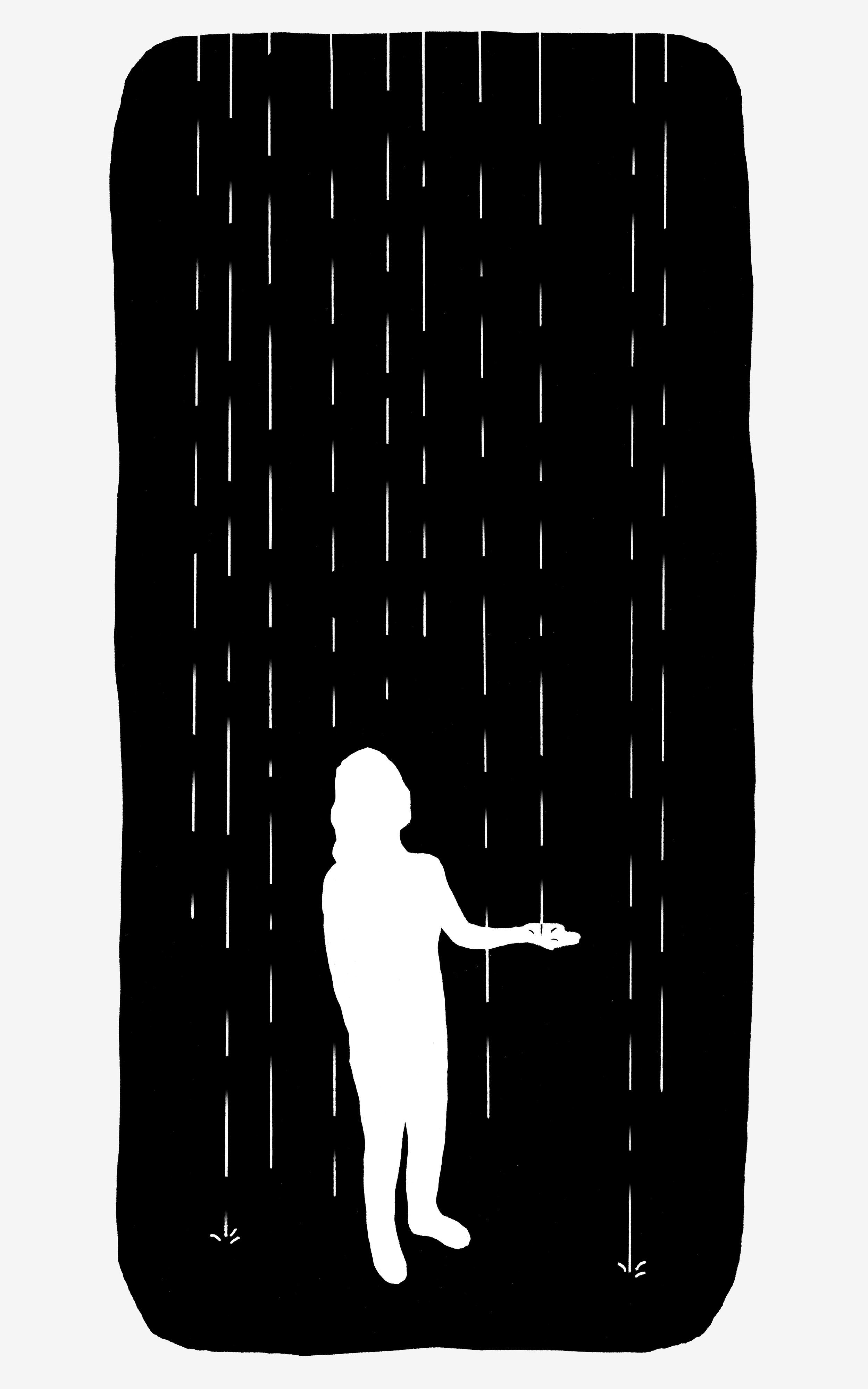
“Around that time, a miracle happened in the town of Mojo. On one of the days during the rainy season, honey rained from the heavens. The children noticed it first and shouted, ‘It’s raining honey!’ I dipped my finger into the container we had collected rainwater in and tasted it. It tasted like sugar. I couldn’t believe it. I knew what sugar tasted like; Sarkis had brought some for us. I went out into the drizzling rain, put my hand out, and licked my palm. Sugar. Even after the rain stopped, the children ran around drinking from the drains and licking the soil. They were drunk with sugar. Babies born around that time were named Honey and Sugar. You see, Sarkis did not only claim our Seble’s heart, but he also took our right to name the baby according to that rare history. Most of those who tasted that heaven-sent broth became resistance fighters, and nearly all of them have since passed away.
“I went out into the drizzling rain, put my hand out, and licked my palm. Sugar.”
“Independence was reclaimed. That useless king was brought back by the English. Those who fearlessly led the resistance, like Geresu, Belay, or Abebe Aregay, should have been enthroned. When my properties were returned to me, I found that an Italian officer had demolished my cottage and built this building instead. I don’t like it. It is cold and doesn’t let fresh air in freely. I never sleep in there. I prefer the mud hut built behind it. Queen Zewditu gave me a lot of land around Shiromeda. I sold most of it and bought houses to rent out. People thought Rosa was half Italian, so they abused her… called her names. Being mixed with whites was not as desirable as it is now. Sometimes, when they made her cry, I’d go out with my walking stick and give them a taste of my wrath… When we told the neighborhood that her father was Armenian, they calmed down. When she grew older, all the young men’s eyes were fixed on her. We said, ‘Calm down! Can’t you see she is not the only beautiful young lady around? Weren’t you the ones who called her names only a few years back?’
“Seble never wanted to get married after Sarkis’ death. She became withdrawn… not out of secrecy but from grief. This nation was at war for years. God knows how many women lost husbands and lovers, and how many became disabled. I, myself, married late to Assefa’s father, Suba… but it was so brief… he went to the Korean War and came back sick. Not long after that, he died…
“What I’m saying is that our men didn’t fight only in our own wars but also in others’… Can you imagine dying for Korea? Did we have an overpopulation of men to export them like our coffee? What is Korea to us? Some of us didn’t even know of its existence until then. Then, war kept breaking… from Somalia side, then up north via Hamasen… War everywhere. Why? Now I hear of riots in schools. I don’t like it at all. The other day, a stone someone threw at the police blinded him. I saw him bleeding with my own eyes. Tell me, how many households are to break up? Fitawrari Meshesha drove Seble away. The Italians drove me, Seble, and Sarkis away. Sarkis died. Bezabih died. What is the difference between Meshesha and Mussolini? What is the difference between a student throwing stones and Korea? Think about it. All these brutalities made my dear lady ill. The doctors couldn’t help her. She died soon after. She is resting in heaven… It is I who am at a loss. God knows how much suffering we would endure. He has allotted the amount of tears we are to shed. Mine could have filled a ten-liter pot. I spent them all mourning your grandmother.
“I was left only with your mother and Assefa, Suba’s son. Those two were like siblings. He cared for her like the apple of his eye. Your father was Assefa’s friend. He said your father was a superb student. He used to come to visit Assefa often. Once again, I was fooled. I was blind to his relationship with Rosa. He was not her type… He is a charlatan. If only she had some friends… but she didn’t. You know why? Because they were jealous of her looks… One day, when she could take it no more, she told me she was pregnant by him. He had travelled to study in England at the time. We sent him letter after letter… not a word from him. She was devastated at the idea of raising you as a bastard. Even though he married her when he returned, Rosa never forgave him for what he put her through. Assefa doesn’t talk to him to this day. I’m not slandering your father; he is my son-in-law, but he doesn’t deserve Rosa. To this day, I remind him of what he put her through… He says, ‘Will you ever let it go?’
I thought, Why is she telling me all this? I have heard it all before.
“The reason I’m telling you all of this… Don’t let yourself be vulnerable like your mother or your grandmother… Maybe it’s her looks, her eyes… Teach yourself to be stronger. Not the strength of a cow or a donkey, but that of a human. If perseverance and hard work are not paired side by side, you’ll be pushed around like a pebble. Do you understand?
“Have something to eat before you leave. We have a delicious pumpkin wot.”
“I don’t want any.”
“Try it, it is made with kibe.”
“No, Enana, I don’t feel like eating.”
“Don’t worry about your father. Fooling around is in his nature. Can a bobcat resist hunting if put in the middle of chickens? Or, will chickens resist pecking on scattered grain?”
I laughed.
“Don’t worry, I know that is a fake laugh. You are like your mother… You can’t let go. Tsehai told me how your father disgraced your mother last Saturday at the party… And what did your mother do? She went to St. Mary’s Church. What does she expect from Mary? My sweet, don’t be soft like your mother… if you can. Nature is hard to resist.
“Why won’t you eat my pumpkin, do you think it is beneath you to eat humble food?”
“What is there to like about pumpkin?”
“Well, it is either the pumpkin… or the sugarcane… or the blessing of a holy person that gave me long life. It can’t be my prayer. God doesn’t listen to me. I have noticed that God only blesses me through the well-being of people I love… You and Rosa.
“I am getting weak these days. I struggle to get down these steps.
“When you get home, don’t sulk or avoid your father. You know, your mother was probably praying for your father when she went to St. Mary’s. What to do with her? As for you, show him your displeasure. Don’t laugh while being kicked. Only a bucktooth or a fool does that. I couldn’t sleep last night. He made a laughingstock of himself and of us all at that party.”
“That loudmouth, Tseha, shouldn’t have called you.” I said.
“Even if I can’t do anything, I had to know. All I can do is talk to you.”
“I have to go… I will come tomorrow.”
“You don’t have to visit that often.”
“It’s fine. I will go to Piazza to watch a movie; it’s not far to get here from there.”
“Ok, don’t forget to bring me my sugarcane.”
“You haven’t even finished the ones I brought today.”
“I only like fresh sugarcane. Here, you have it on your way home.”
When I got home, I didn’t confront my father for fear of worsening the tension in our family. For weeks after the incident at the party, our house was filled with a gloomy silence. The scale of emotions is not like the one used for objects; once it is uncalibrated, it is not easy to adjust. To this day, I can still recall the heaviness that descended on our family then.
I continued to visit Enana until about 1974. On April 24, St. Gabriel’s Day, we were told she had passed away in her sleep. When Mother and I got to her house (my father had travelled for work to Norway), Enana was lying on her bed, covered with her gabi. I couldn’t believe she was really dead, so I gently uncovered her face. Her eyes were closed. Her mouth was slightly open. It looked as if her last breath had escaped through that gap. Her skin felt smooth and cold. Was her hair this white? The smell that came from her pores was a combination of sugarcane, pumpkin, and artemisia. People like her, who tell it like it is rather than exaggerate or diminish and never settle for an alternative truth, do come. They finish their allotted time on this earth and pass away. I felt like crying, and I wanted to kiss her. I leaned down and put my cheek to hers. I recalled her gentle caress with those shriveled, frail hands… hands that still bore the scars from the cuts she had made in her youth while decorating calabashes. I remembered how she steadily and seamlessly balanced humor and wisdom. She may not have lived the kind of life she wanted, but she had seen a lot. It was a bit sad, but also lucky. I covered her face again with her gabi. Mother had both hands on her head and cried, walking back and forth behind me. Her slender frame was trembling. If she went on like this, I was afraid she would break apart. I tried to hold her and calm her, to no avail. She no longer had the strength to hold herself together. She slid down and started to crawl on all fours toward Enana’s bed. I started to cry. On top of the death of my grandmother, I found my mother’s condition heartbreaking. She went unconscious. For two weeks after Enana’s death, my mother was too weak to get out of bed. Only recently, her husband hurt her. Now, her Enana was dead. It was all too much for her.
I never knew that discord and harmony, love and fate, sincerity and deceit, the outside and the lining could coexist in my own home. I couldn’t conceive that what looked like a beautiful flower would prick me with its spike. The good passes away, and the evil remains. The wicked also passes away, and the decent stays put. I realized that an incident would come which would break the boundary between the beauty of the flower and its spike. This was my world, in a neighborhood called Shiromeda, in the suburbs of the capital city. I hid my confusion of early adolescence in my narrow chest. Thus, in these formative years of my life, I reminisced and then—while dancing jark, cha cha, and boogie woogie—I forgot.
Adam Reta, born in 1958 in Addis Ababa, Ethiopia, is the author of eight short story collections and four novels in Amharic, including መረቅ, “Broth.” He now lives in Ontario, Canada. His novels have received significant recognition, with two winning the HoHe prize (hoheawards.org) for best novel of the year, specifically የስንብት ቀለማት in 2017 and አፍ in 2019. His English story “Of Buns and Howls” was featured in “Addis Ababa Noir,” an anthology edited by Maaza Mengiste, and published in 2020. His short story የድንች መዋስት, “Requiem for Potatoes” (2020), and his short story collection እቴሜቴ ሎሚ ሽታ “Couch Grass” (2025), were also published in English translation.
Bethlehem Attfield is a bilingual literary translator specializing in Amharic and English. She earned her PhD in Translation Studies from the University of Birmingham. Her debut translated novel, “The Lost Spell,” was published by Henningham Family Press in the UK and was shortlisted for the 2022 TA First Translation Prize by the Society of Authors. In 2023, she received the Global Africa Translation Fellowship Award. She has translated two works by Adam Reta: “Requiem for Potatoes” (2020) and “Couch Grass” (2025). Additionally, she hosts a YouTube podcast, Journey to Ethiopia with Story, promoting Amharic literature translation.